Commercial kitchen decarbonisers provide a practical way to remove stubborn grease, baked-on food deposits and burnt-on carbon from suitable metal catering equipment. Instead of relying on prolonged hand scrubbing, compatible pots, pans, trays, oven racks, fryer baskets, cooking plates, extractor filters and utensils are placed in a heated decarbonising solution and left to soak for the recommended period.
This makes a commercial decarboniser particularly useful in busy restaurants, hotels, cafés, pubs, takeaways, bakeries, canteens and contract-catering kitchens. Heavily soiled equipment can be cleaned as part of a planned routine, including during quieter periods or overnight where the product instructions permit, helping kitchen teams spend less time on repetitive manual cleaning.
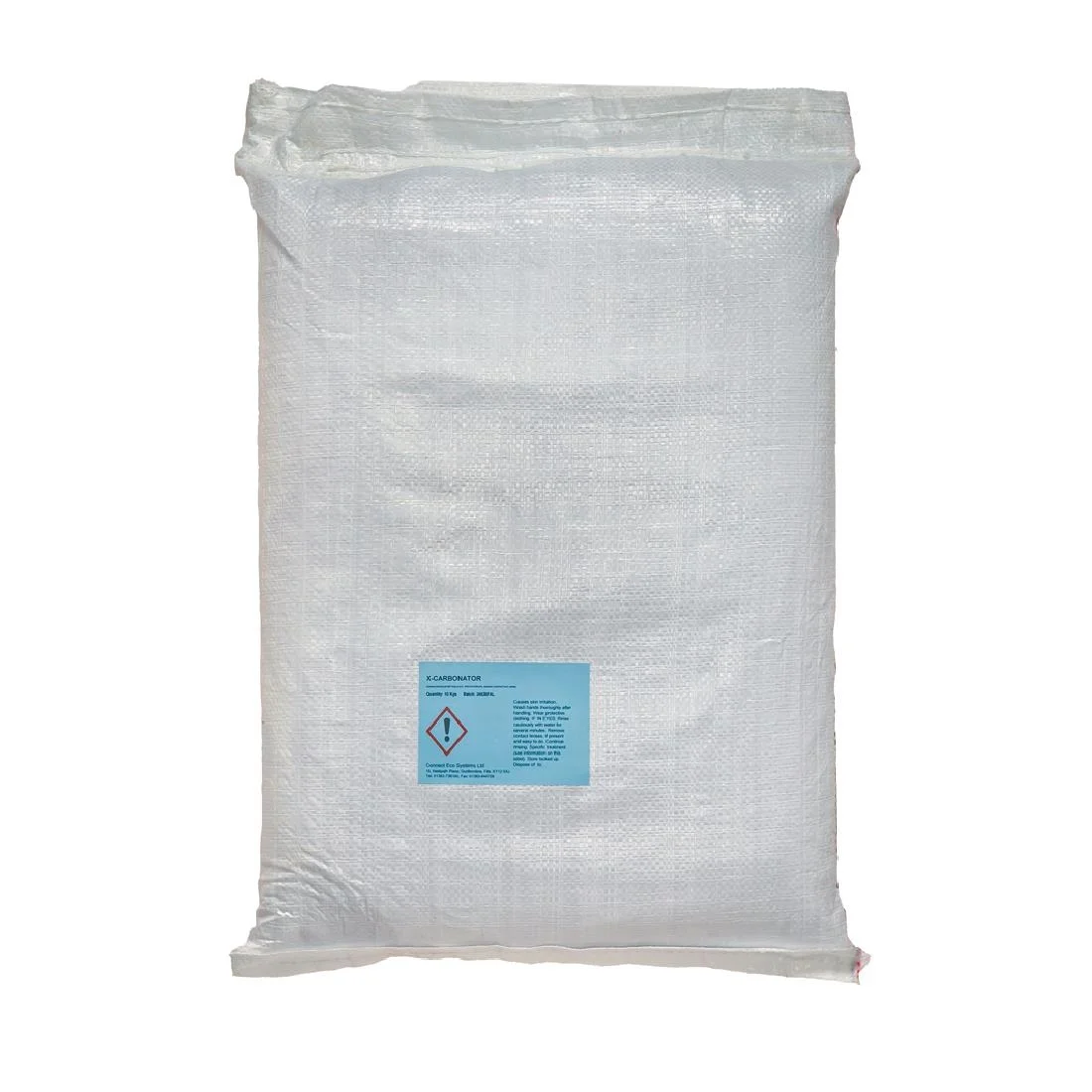
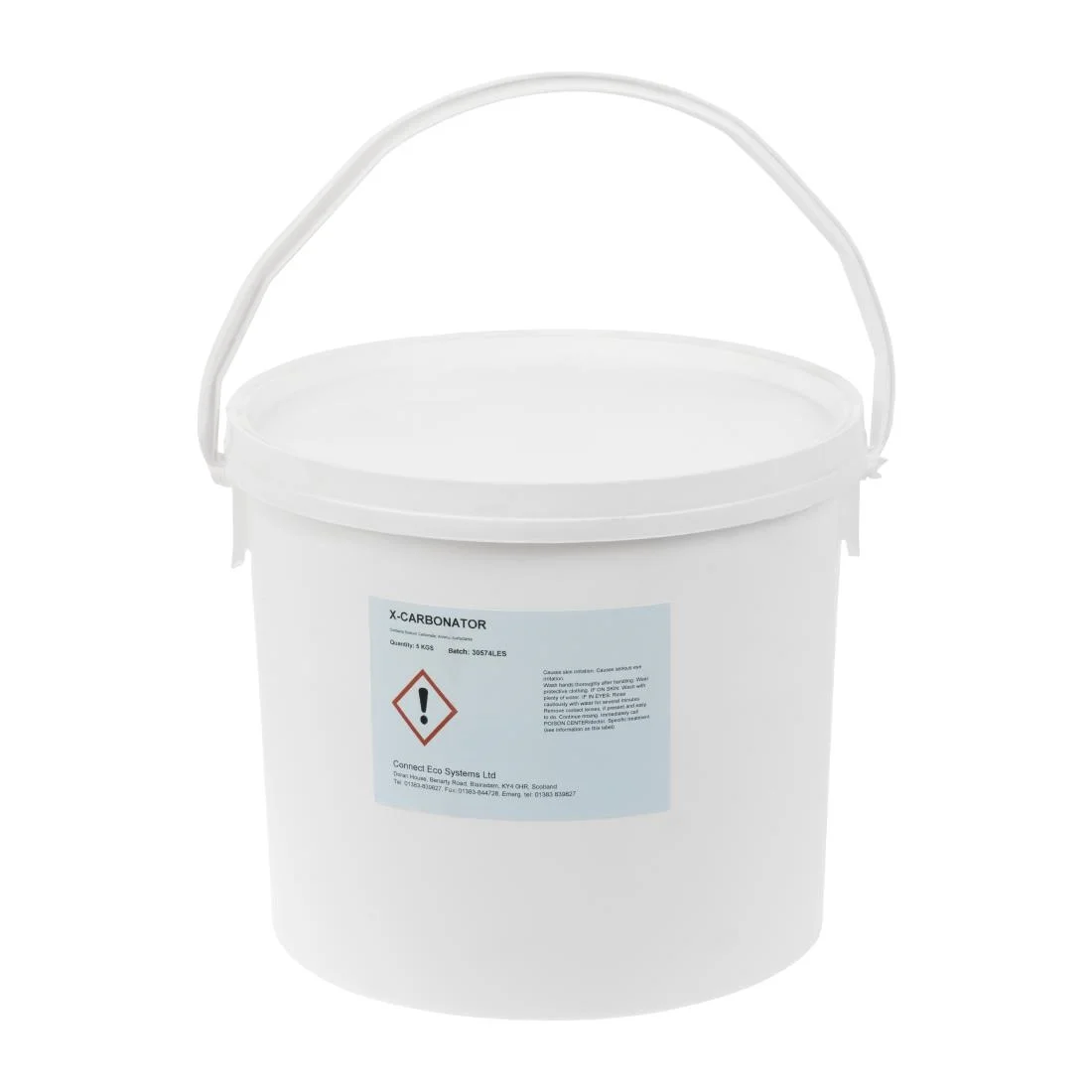
10kg. Makes 200Ltrs
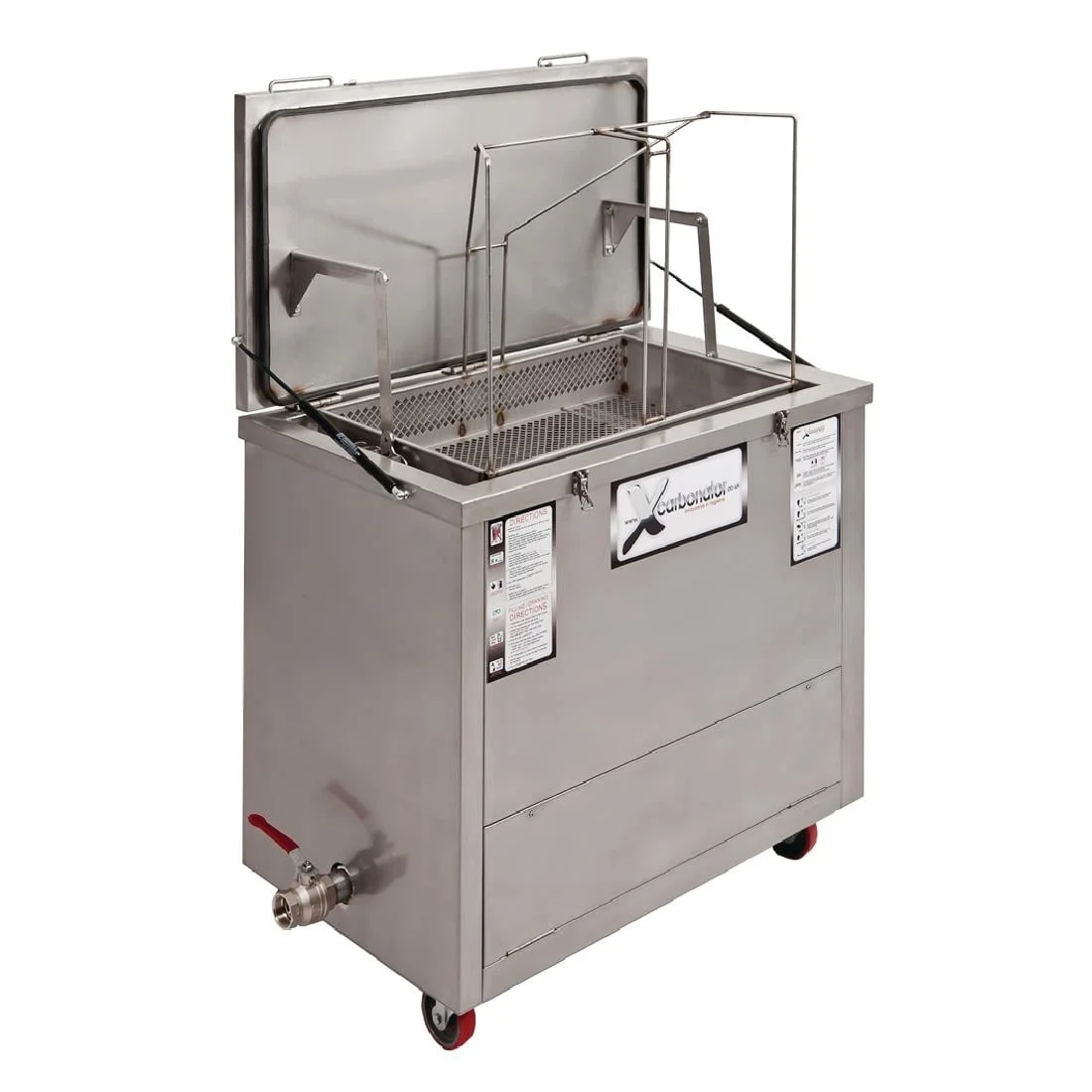
1kW. Capacity: 250Ltr. 3x 10kg powder
5kg. Makes 100Ltrs
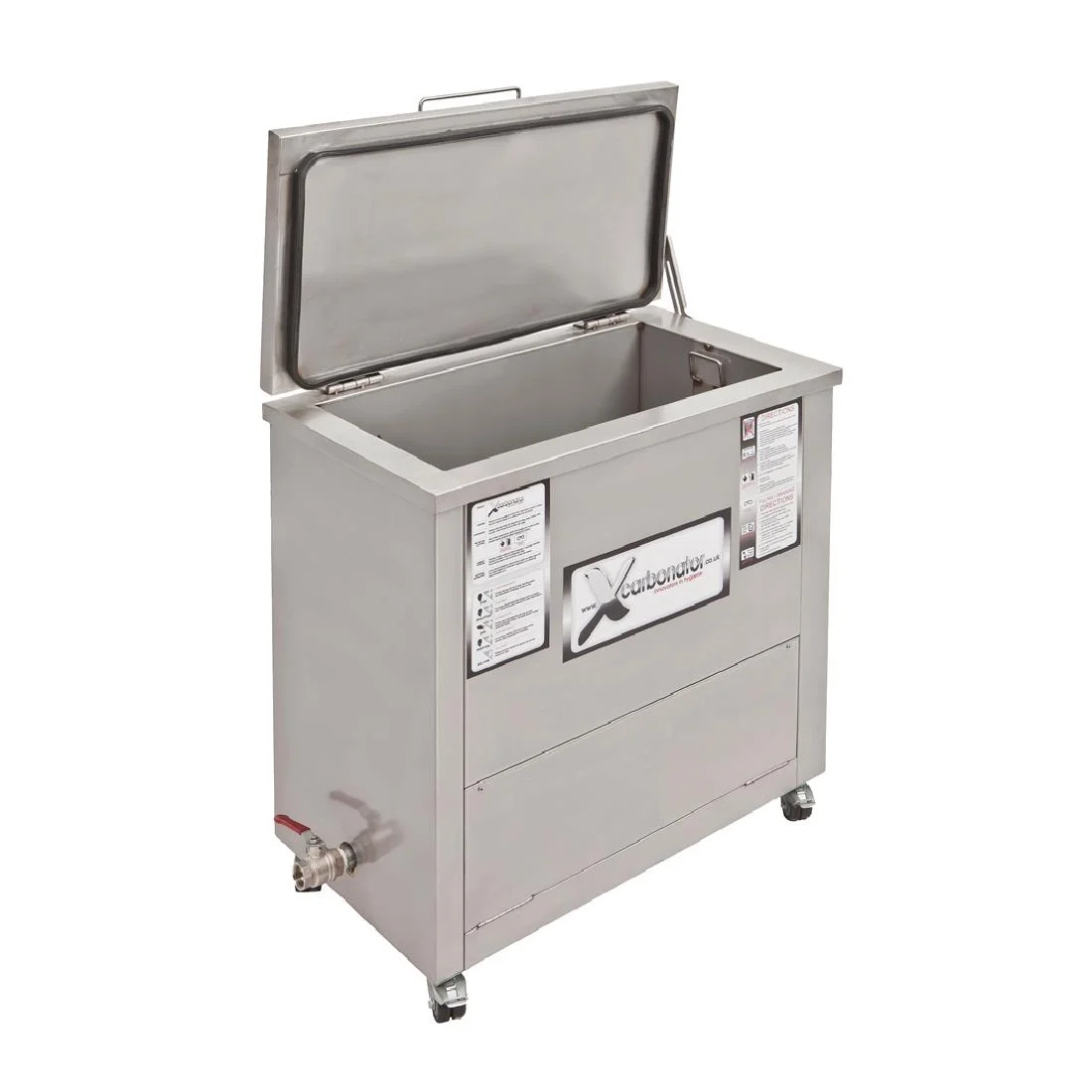
1kW. Capacity: 150Ltr
1kW. Capacity: 150Ltr. 3x 5kg powder
1kW. Capacity: 250Ltr
A decarboniser is an insulated, heated soaking tank used with a purpose-formulated cleaning solution. The controlled heat and solution work together to loosen accumulated grease and carbon from suitable removable kitchen equipment. Once the recommended soaking time has elapsed, the operator lifts the items from the tank and rinses them thoroughly in accordance with the operating instructions.
Soaking allows the solution to reach corners, joins and other awkward areas that can be difficult to clean effectively using scourers alone. This can reduce strenuous scrubbing, minimise the routine use of abrasive cleaning materials and release staff for other preparation, service and hygiene duties.
Depending on its material, construction and manufacturer’s cleaning instructions, equipment suitable for decarbonising may include:
Only items confirmed as compatible with the tank, cleaning solution and operating temperature should be immersed. Electrical components, complete powered appliances and items made from unsuitable or unverified materials must not be placed in the tank. Always check the equipment manufacturer’s cleaning guidance before treatment.
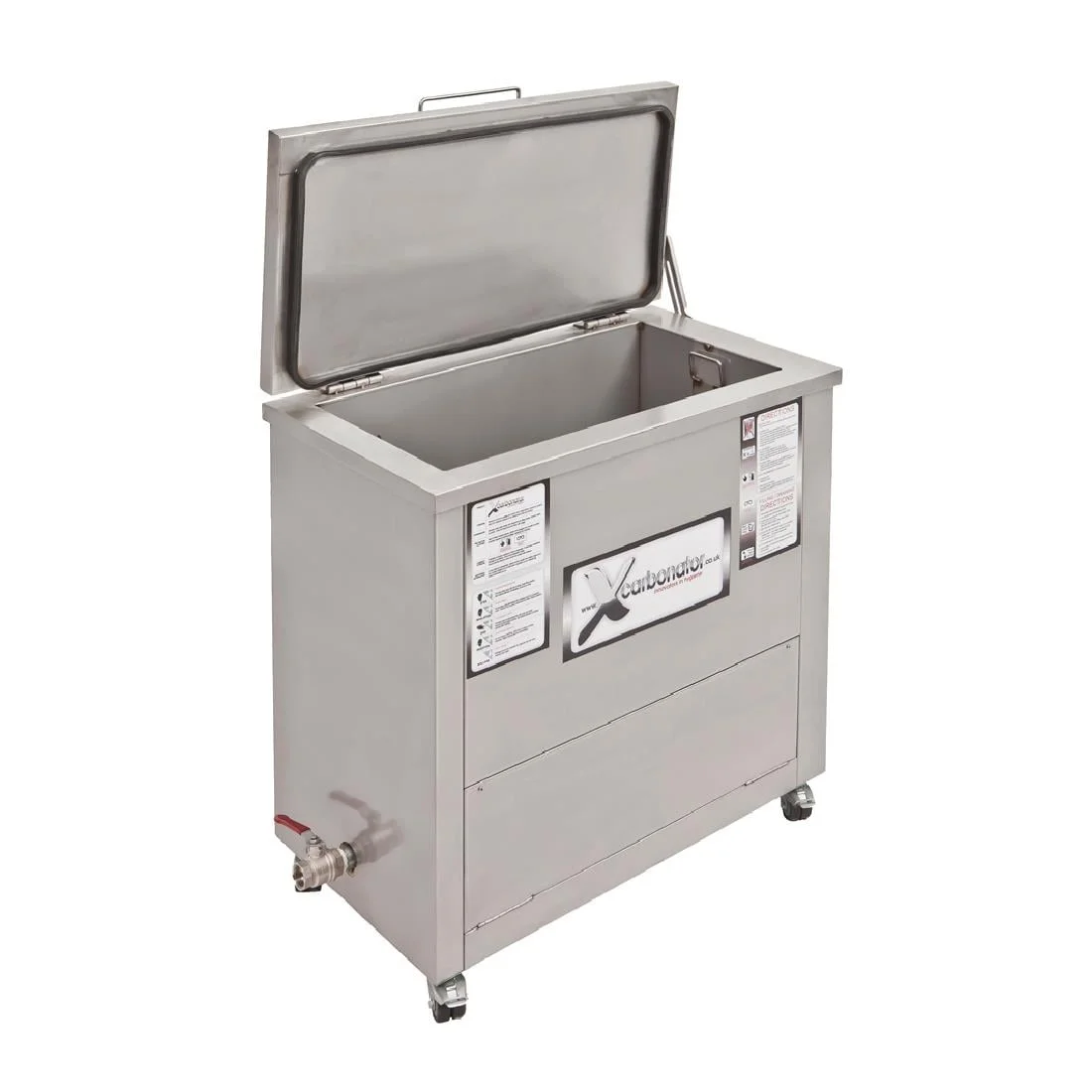
The Xcarbonator range includes two principal tank sizes, allowing operators to choose according to the dimensions and quantity of equipment they need to clean.
The compact Xcarbonator XCR-31 has a 150-litre capacity and an integral basket with a manual lifting arrangement. It is well suited to small and medium-sized hospitality businesses, bakeries and specialist cleaning operations that need an accessible, space-conscious decarbonising system.
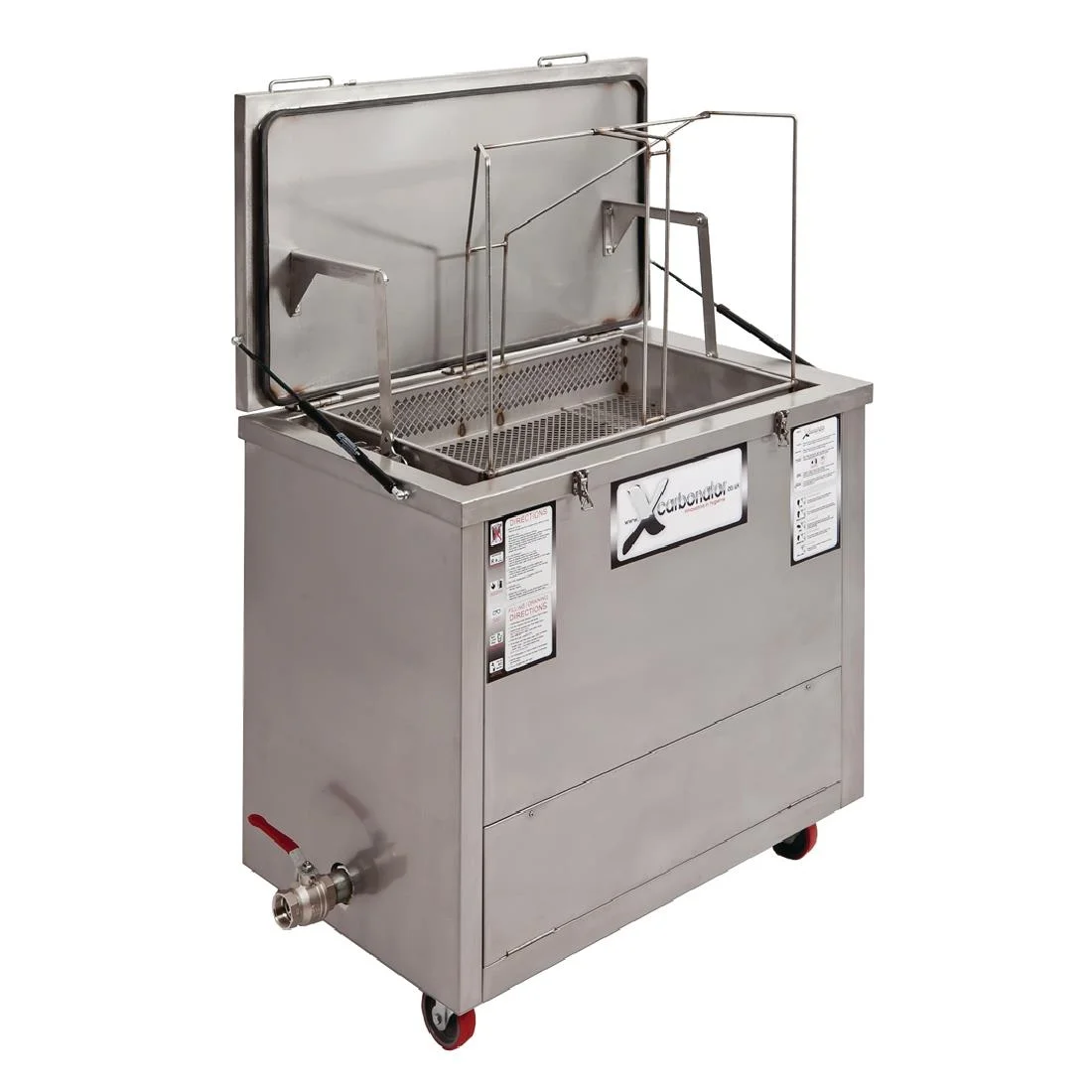
For larger utensils and higher-volume cleaning requirements, the Xcarbonator XCR-48 provides a 250-litre capacity and a built-in lift-assisted mechanism. This assists the operator when handling the lid and loaded equipment, helping to reduce the physical effort associated with a larger tank.
Both models are available as standalone tanks, with the required Xcarbonator powder purchased separately, or as convenient starter bundles. The XCR-31 bundle includes three 5kg bags of decarboniser powder, while the XCR-48 bundle contains three 10kg bags. Each bundle provides sufficient powder for two initial fills when prepared as directed.
The Xcarbonator models featured here are 1kW, plug-and-go appliances designed to require minimal operator training. They do not require a permanent specialist plumbing connection: the XCR-31 has a 1-inch ball tap for controlled draining, while the larger XCR-48 has a 1.5-inch ball tap. A suitable filling, drainage and waste-disposal arrangement must still be available at the installation site.
Twin-skinned construction helps retain heat while keeping the exterior safer to touch during normal operation. Braked castors allow the tanks to be positioned for use and cleaning, although each unit should remain stationary with its brakes applied whenever it is filled or operating.
Xcarbonator powder is a concentrated, non-caustic and non-corrosive formulation that is stated by the manufacturer to be suitable for aluminium as well as compatible metal catering equipment. However, non-caustic does not mean hazard-free: the powder is classified as an irritant, so operators must wear suitable protective gloves and eye protection and follow the supplied instructions and safety data sheet.
With the correct tank size, solution concentration, operating procedure and soaking schedule, a commercial kitchen decarboniser can make the cleaning of carbonised catering equipment more consistent and less labour-intensive while supporting a cleaner, more presentable working environment.
What is a commercial kitchen decarboniser?
A commercial kitchen decarboniser is a heated, insulated soaking tank designed to loosen stubborn grease, baked-on food and burnt-on carbon from suitable metal catering equipment. Pots, pans, trays, filters and other compatible removable items are immersed in a purpose-formulated solution, left for the recommended period and then removed and rinsed. This reduces the amount of repetitive hand scrubbing required to clean heavily soiled equipment.
How does a decarboniser remove burnt-on grease and carbon?
A decarboniser combines controlled heat, water, a specialist cleaning solution and sufficient soaking time. The heated solution penetrates and loosens accumulated grease and carbon, including deposits in corners and other areas that are difficult to reach with a scourer. The required treatment time depends on the item’s material, the type and thickness of the deposit, and how frequently the equipment is cleaned.
What commercial catering equipment can be cleaned in a decarboniser?
A decarboniser can be used for compatible metal pots, pans, baking trays, roasting trays, oven racks, fryer baskets, cooking plates, gas rings, extractor filters, utensils and certain removable machine components. Suitability must be confirmed before immersion because coatings, handles, joints and mixed-material construction can affect whether an item can be safely treated.
What should not be placed in a commercial decarboniser?
Do not immerse powered appliances, electrical components or any item whose material or cleaning compatibility has not been confirmed. Coated, painted, non-stick, bonded, plastic, wooden or other heat-sensitive components may require a different cleaning method. Check both the decarboniser instructions and the equipment manufacturer’s care guidance before treating an unfamiliar item.
How long does commercial kitchen equipment take to decarbonise?
Soaking time varies according to the equipment, material and severity of the build-up. The Xcarbonator product guidance indicates that air filters may take approximately two to four hours and cooking plates approximately six to eight hours under suitable conditions. Heavier or older carbon deposits can require a longer treatment, while regularly maintained items may clean more quickly. These times are guidance rather than a guaranteed result.
Can catering equipment be left in a decarboniser overnight?
Compatible equipment may be left to soak overnight when this is permitted by the decarboniser and equipment instructions. Overnight soaking can be useful for heavily carbonised items and allows cleaning to take place outside busy service periods. The tank must be operated safely, the correct solution concentration must be used, and the items must not contain materials that could be damaged by prolonged immersion.
What is the difference between the Xcarbonator XCR-31 and XCR-48?
The XCR-31 is a 150-litre decarboniser with an integral basket and manual lifting arrangement. It is intended for relatively compact loads and small to medium-sized commercial kitchens. The larger XCR-48 has a 250-litre capacity and a built-in lift-assisted mechanism, making it more appropriate for larger equipment, heavier loads or higher-volume cleaning. Buyers should compare usable tank space as well as overall capacity before choosing a model.
Which size of decarboniser does a commercial kitchen need?
Choose a decarboniser by considering the largest item that needs to be immersed, the number of items cleaned during each cycle, available floor space and the required turnaround time. A 150-litre model may be sufficient for smaller utensils, trays and filters, while a 250-litre lift-assisted tank provides more room for larger equipment and busier cleaning schedules. The external dimensions and access route should also be checked before ordering.
Do Xcarbonator decarbonisers need a permanent plumbing connection?
The Xcarbonator tanks shown in this category do not require a permanent specialist plumbing connection. The XCR-31 uses a 1-inch ball tap for draining and the XCR-48 uses a larger 1.5-inch ball tap. The installation area must nevertheless have a suitable water-filling method and an appropriate arrangement for draining and disposing of the used solution in accordance with the operating instructions and local requirements.
What electrical supply does an Xcarbonator decarboniser require?
The XCR-31 and XCR-48 models in this range are rated at 1kW and are designed as plug-and-go appliances operating from a 220–240V supply. The exact plug, circuit suitability, operating clearances and site conditions should be checked against the selected model’s specification and user manual before installation.
Is decarboniser powder included with the tank?
That depends on the selected product. The standalone XCR-31 and XCR-48 tanks require the cleaning powder to be purchased separately. The XCR-31 starter bundle includes three 5kg bags of Xcarbonator powder, while the XCR-48 bundle includes three 10kg bags. The listed bundles provide enough powder for two initial tank fills when mixed according to the supplied directions.
Is Xcarbonator decarboniser solution safe for aluminium?
Xcarbonator states that its genuine non-caustic, non-corrosive powder can be used on aluminium. This does not automatically establish the suitability of every aluminium product because an item may also have coatings, bonded parts, handles or other materials. Confirm the construction of the complete item and follow its manufacturer’s cleaning instructions before immersion.
Does non-caustic decarboniser powder still require protective equipment?
Yes. Non-caustic does not mean that the powder is harmless. Xcarbonator classifies its concentrated powder as an irritant and instructs operators to wear suitable protective gloves and eye protection. Staff should also follow the safety data sheet, avoid inhaling dust, prepare the solution correctly and take care around the heated tank and wet equipment.
How can a decarboniser reduce cleaning labour in a hospitality kitchen?
A decarboniser replaces much of the prolonged scraping and scrubbing associated with carbonised catering equipment with a controlled soaking process. Once the tank is loaded correctly, staff can attend to other kitchen duties while the solution works. It can also reduce routine dependence on scourers and steel wool, although items still need to be safely loaded, removed, rinsed and inspected.
Why does the XCR-48 have a lift-assisted mechanism?
The XCR-48 is a larger 250-litre tank intended for bigger items and higher-volume cleaning. Its lift-assisted mechanism reduces the physical effort involved in opening the unit and handling its loaded basket. This can make operation more manageable and help reduce strain, but staff must still follow safe loading limits, handling procedures and personal protective equipment requirements.
How should equipment be handled after decarbonising?
Allow the complete cleaning cycle to finish, then remove the equipment using the specified basket or lifting method while wearing the required protective equipment. Rinse every item thoroughly with clean water, inspect it for remaining deposits and allow it to drain or dry before returning it to food-contact use. Follow any additional cleaning or sanitising procedure required by the equipment manufacturer and the kitchen’s food-safety system.
How should a commercial decarboniser be maintained?
Follow the model-specific instructions for monitoring the solution, removing loosened residue, draining the tank and cleaning its internal surfaces. Before servicing or carrying out maintenance, disconnect the electrical supply and allow the tank and solution to cool sufficiently. Ball taps, baskets, lifting components, castors and brakes should be kept clean and checked for safe operation.